Ford Engine Repair – Englewood, CO
From daily-driven EcoBoost crossovers to workhorse Power Stroke diesels, we diagnose and repair Ford engines with OE procedures, brand-correct fluids, and torque specs. At TurboSpeed Auto Sales LLC, our technicians use factory-level scan tools, service information, and proven mechanical tests to fix it right the first time.
Whether you’re chasing a rough idle, loss of power, oil consumption, or an illuminated MIL, we restore performance, reliability, and fuel economy.
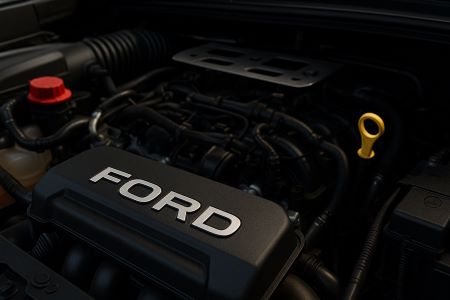
Ford Models We Service
- Trucks & SUVs: F-150/F-250/F-350, Ranger, Maverick, Bronco, Explorer, Expedition, Escape, Edge.
- Cars & Performance: Mustang (EcoBoost, GT, Mach 1, Shelby), Fusion, Focus, Fiesta, Taurus.
- Commercial: Transit, Transit Connect, E-Series.
- Lincoln: Navigator, Aviator, Nautilus, Corsair, MKZ/MKS (powertrain support).
Popular Ford Engines We Repair
- EcoBoost Gasoline: 1.0/1.5/1.6/2.0/2.3/2.7/3.0/3.5 (DI/PI, turbo, charge air & HPFP systems).
- 5.0L “Coyote” V8: variable cam timing (Ti-VCT), oil system leaks, timing components.
- 3.7/3.3/3.5/4.6/5.4 Modular/Triton: coil-on-plug, cam phasers, timing chains/guides.
- Power Stroke Diesel: 3.0, 6.7 (EGR/DPF/SCR, HP fuel, turbo & charge-air diagnostics).
- Duratec/Dragon: 2.0/2.5/1.5 3-cyl (cooling, PCV, GDI carbon control).
Common Ford Engine Symptoms
- Check Engine Light with P0xxx/P1xxx DTCs, misfires (especially under boost or load).
- Rough idle, hesitation, low power; turbo whistle or boost leak noises (EcoBoost).
- Chain rattle/cam-phaser tick at start-up, VCT performance codes.
- Oil/coolant leaks, consumption complaints, or sweet/burning smells.
- Overheating, degas bottle venting, or intermittent temperature spikes.
- Diesel: DEF/EGR/DPF warnings, regen issues, hard start, or lack of power.
What We Repair & Service
- Ignition & Fuel: coils, plugs (proper heat range/gap), DI/PI injectors, HPFP/LPFP, rail sensors.
- Air & Boost: throttle bodies, intercoolers, charge pipes, wastegates, diverter/boost control.
- Timing & VCT: chains, guides, tensioners, cam phasers, crank/cam sensors, relearns.
- Cooling: water pumps (belt/chain-driven), thermostats, radiators, degas tanks, head-gasket testing.
- Lubrication & Seals: oil pan/valve cover gaskets, front/rear main seals, oil pump, leaks.
- Internal Engine: compression/leak-down, cylinder head/valve work, short/long block replacement.
- Diesel Systems: glow/HP fuel diagnostics, EGR coolers, turbo VGT control, aftertreatment faults.
- ECM/PCM & Wiring: pinpoint tests, TSB checks, software updates, connectors & harness repair.
Our Ford Engine Diagnostic Process
- 1) Digital Scan: enhanced Ford/Lincoln module scan, live-data, mode-6, freeze-frame.
- 2) Mechanical Tests: smoke-test intake/EVAP, compression/leak-down, fuel & cooling pressure.
- 3) Confirmation: Ford service info & TSB review; component pinpoint testing.
- 4) Estimate: clear parts & labor options (OEM or premium aftermarket).
- 5) Repair: OE torque/fluid specs, timing & phaser setup tools where required.
- 6) Validation: road test, relearns/idle trims, post-repair scan and report.
You’ll leave with a clear digital summary, replaced-parts list, and maintenance recommendations.
Pro Tips for Ford Owners
- Use the exact Ford/WSS oil spec and interval—critical for VCT & turbo longevity.
- Replace spark plugs and coils at the recommended mileage; check gaps on boosted engines.
- Keep the cooling system healthy; address leaks early to avoid overheating damage.
- For GDI engines, schedule intake valve cleaning to manage carbon buildup.
FAQs
Do you use OEM parts?
We source OEM or premium equivalents and follow Ford service procedures and torque values.
Can you diagnose EcoBoost boost or fueling issues?
Yes—intake smoke tests, boost leak checks, fuel pressure testing, and data-driven analysis are part of our standard workflow.
Do you work on Power Stroke diesels?
Yes—6.7L and 3.0L including aftertreatment (EGR/DPF/DEF) and VGT turbo diagnostics.